Taff
Finnegans WakeTaff is a combatant in the book’s unstable, multilingual enactment of conflict, first seen looking upward at a blurred revolution and later joined to Butt in a fight that ends not with a simple victory but with the antagonists becoming one. His trajectory turns the apparent opposition between two fighters into a pattern of division, exhaustion, and reconciliation.
Identity and Introduction
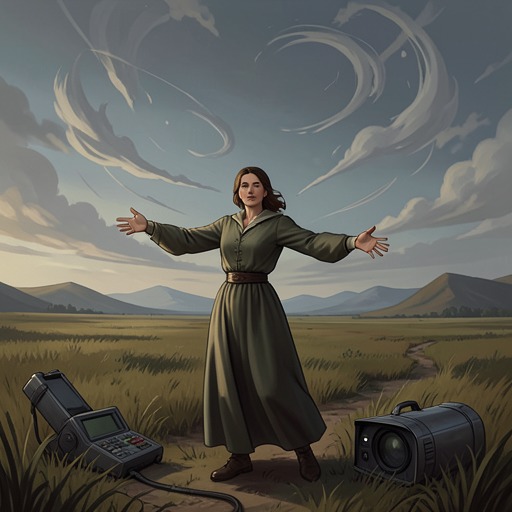
Taff enters as “a smart boy” associated with peat friars, looking through the roof toward a revolution in the order of life. His vision arrives as a flashing, crashing blur, and his questions to Butt make him a witness seeking an account of what is happening as much as an active participant in it. The staged description places him within a deliberately unstable scene: identity, rank, and historical reference are filtered through sound-play and transformed language.
From Vision to Martial Pageantry
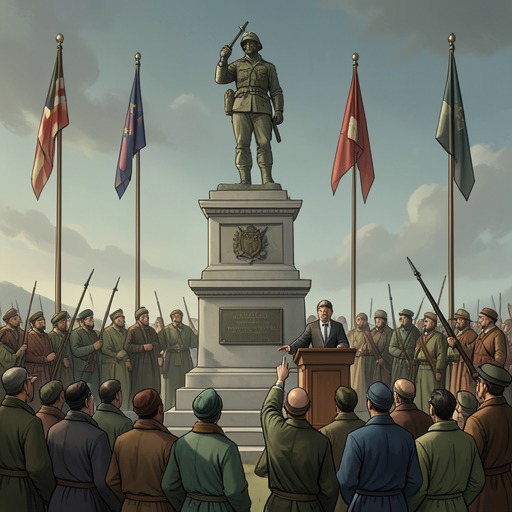
Taff’s later appearance shifts from looking at upheaval to narrating it. He recalls a march through Saint Sepulchre’s, with troops marshalled and a corpse-strewn route, and urges a forward movement and despatch. The report combines military organization, religious procession, and grotesque aftermath, making the past sound less like settled history than an accumulation of recurring campaigns and remembered violence.
His account is not a clear, authoritative chronicle. It is described as a sports report recalled after the fact, and its movement toward the constellations Sagittarius and Draco makes orientation itself part of the performance. The scene’s crowded allusions and scrambled names preserve the force of public history while refusing a stable, literal sequence.
Conflict and Reconciliation with Butt
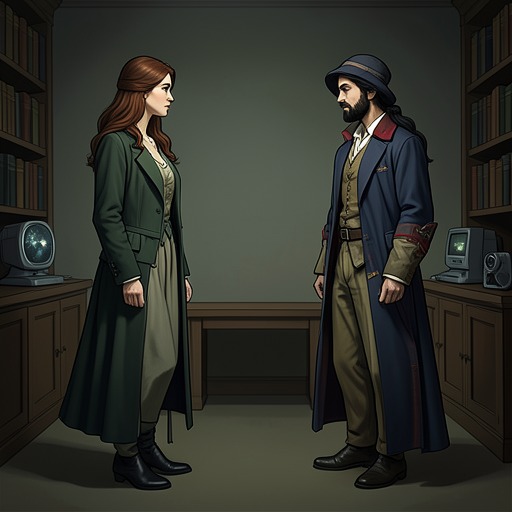
Taff’s relation to Butt culminates in a prolonged fight. The narration calls them both slaves to a wager and feudal foes, then states that they are “now one and the same person.” Their contest is temporarily upheld, baffled, and tottered under the shadow of an old, mythic Russian soldiery; the combat imagery makes their opposition feel at once personal and historical.
The fight does not end in uncomplicated triumph. A figure falls, but the account immediately gathers the combatants and witnesses into a scene of reconciliation: the Parkes O’Rarelys’ concert accompanies a handshaking by “everybothy,” and the pledge of fellowship is performed palm to palm. The gesture converts antagonism into a shared bond, even as the text’s military and commercial language leaves the settlement edged with the history of conflict.
Narrative Role and Significance
Taff’s movement from blurred observer to combatant and then to one half of a reconciled pair gives the episode its central reversal. His early uncertainty about what he sees returns in the unstable outcome of the fight: the two sides are distinguishable long enough to struggle, but not finally separable. Through Taff and Butt, conflict becomes a recurring structure whose resolution is not the erasure of difference so much as its transformation into shared identity and fellowship.